Gaining an Adaptive Edge and Growing a Community of Practice - August 2026
At Abundant Water, we have long known that good ideas do not only come from the top.
Over nearly 20 years of working alongside communities, local vendors, volunteers and program teams, one idea has remained central to how we work: Collective Wisdom. The people closest to a challenge often have valuable knowledge about how to respond to it, and some of the best solutions emerge when people learn from one another.
This idea is now at the heart of our Adaptive Edge Program, developed by Abundant Water CEO Sunny Forsyth and based on principles of adaptive leadership and community of practice.
Chris Draper, Abundant Water’s former Program Supervisor in Timor-Leste, shared how these ideas have helped him navigate challenges in both his volunteering and professional life.
Learning to sit with challenges
Chris's experience with Adaptive Edge began before he moved to Timor-Leste, while he was volunteering with Abundant Water in Australia.
"I did some preparatory training with Sunny, prior to leaving for Timor, aimed at managing the various stressors that would come with the new operating environment," he explains.
Once in Timor-Leste, the learning continued through regular conversations and mentoring.
"At the time, it was quite informal," Chris says. "We would talk about what I'd learnt since the last call, reflect on how these learnings were challenging my biases, and discuss how I could develop a deeper understanding of the factors influencing our work. When this learning process unearthed new opportunities for the program, we would then test its effectiveness in solving our most pressing challenges on a wider scale. My work in Australia developing my own practices for managing stress helped me to create the mental space for this kind of thinking."
Rather than immediately looking for solutions, the process encouraged him to reflect more deeply on the challenges he was facing.
"The training helps you identify and overcome roadblocks in your personal and professional life," Chris explains. "You delve deeper into the issues you face as a leader, ask yourself uncomfortable questions, and come out of it as a clearer and more resilient thinker."
This informal approach has been part of the way Abundant Water has worked with Program Supervisors for several years. More recently, these principles have been formalised into the Adaptive Edge Program.
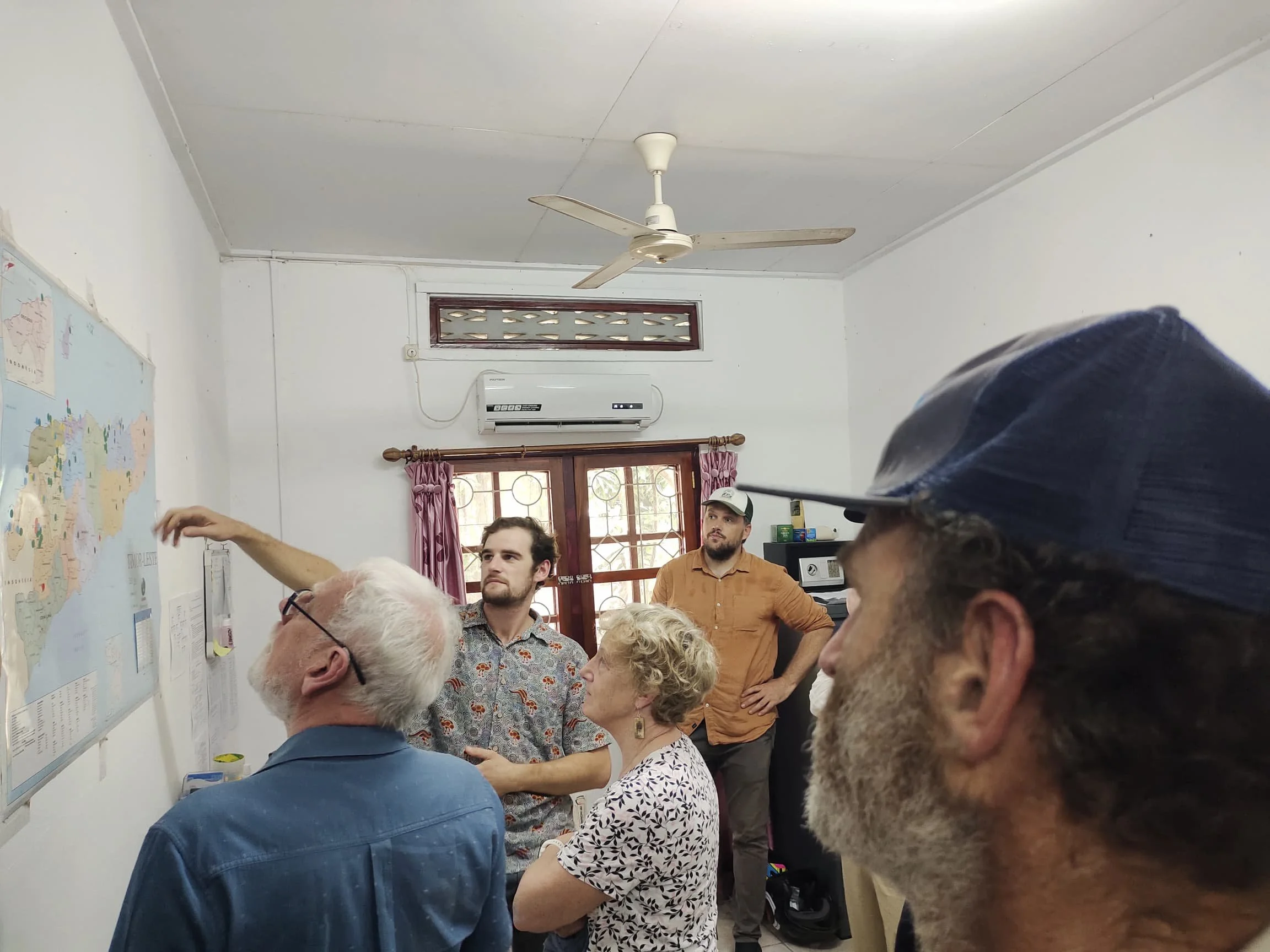
This photo was taken during the study tour Sunny and I took in the districts. During this time, Sunny began promoting the learnings from Timor Leste where I'd really been putting the Adaptive Edge training into practice.
Turning experience into learning
The Adaptive Edge Program supports participants to develop the skills of an Adaptive Leader to tackle challenges: curiosity, self-awareness, focus, reflection, acceptance, developmental learning and tone-setting.
The aim is not to provide a simple answer to every problem. "We can't avoid every challenge that comes our way, and when they do come, there aren't always easy answers for them," says Chris. "So the approach provides people with ways of managing these challenges so they don't get bogged down and can continue to lead with clarity."
For Chris, one of the biggest benefits has been learning how to face difficulties with a clearer mind, rather than feeling stuck or clouded in judgement.
"When I used the tools and reflections I’d learned, I was able to find ways of moving past some of the really challenging questions that I faced in leading the program," he says.
One example came from examining his own assumptions about rural communities in Timor-Leste.
After 6 months of working in-country, Chris felt overwhelmed by the challenge of growing the program as he thought all the market opportunities had been exhausted. With many sales coming from urban and peri-urban areas, Chris assumed that people in rural areas were a more challenging market due to their lower incomes, and therefore less likely to buy Abundant Water's products.
But this assumption did not match what he found.
Through research and learning, Chris discovered that many rural communities were better savers than people in urban areas, partly because their incomes varied from season to season. This meant that people had money readily available to invest in products that could make a real difference to their lives. Chris realised he'd arrived in Timor-Leste with what he describes as an "aid-sector mindset", bringing unconscious biases around spending and wealth that clouded his thinking.
"What I'd previously been stuck on was now an opportunity for the organisation," Chris says. Reaching rural communities went on to become a strategic focus for the following year.
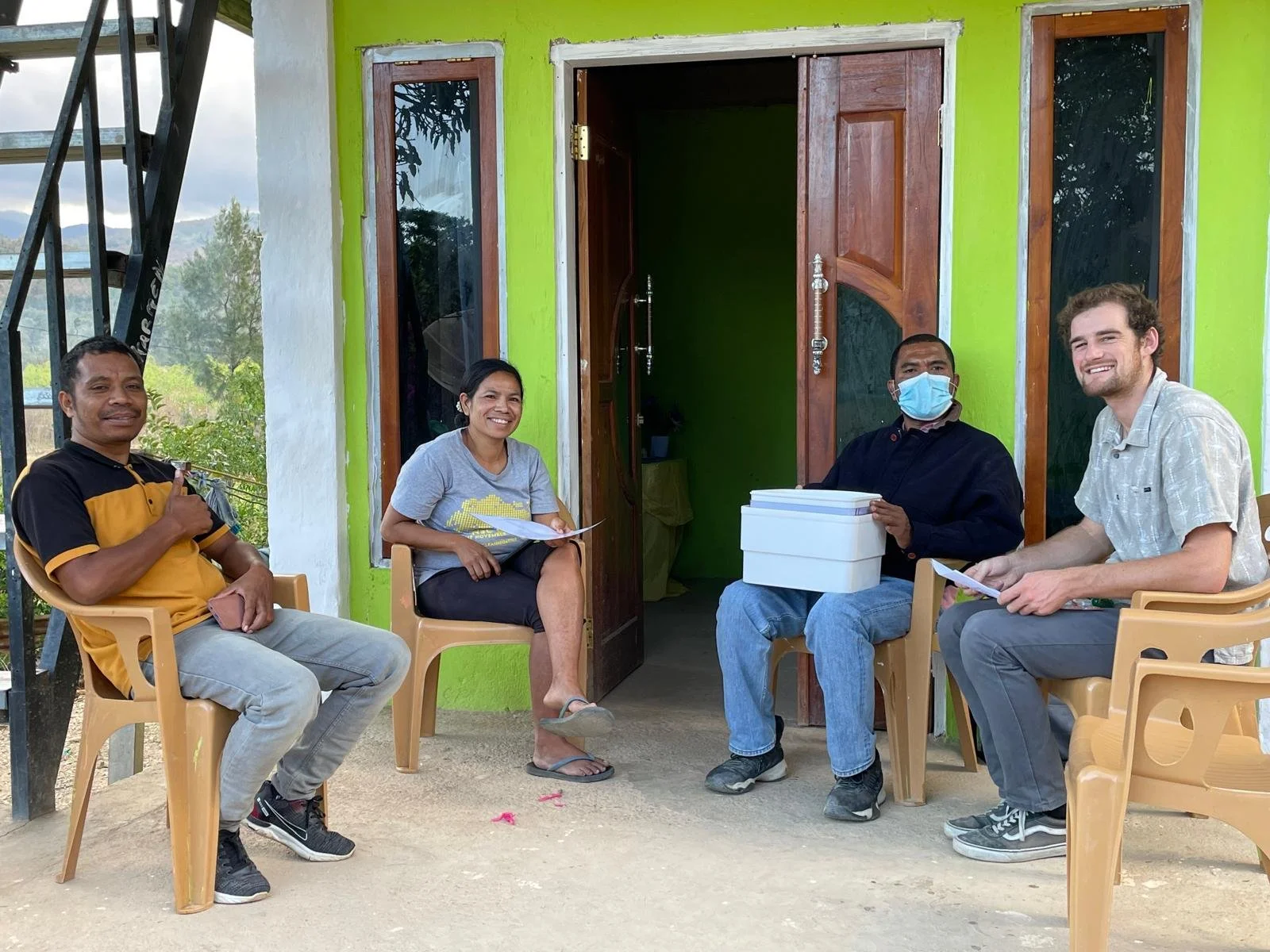

These photos illustrate my experience in rural Timor Leste, using the Adaptive Edge approach. My big breakthroughs came from understanding the system that we worked within and resolving the many challenges we faced. Much of this involved continuous learning, trialing and adapting approaches in the field, and the people to people connections were crucial to this.
A Community of Practice that grows beyond the training
For organisations working in complex and constantly changing environments, technical knowledge alone is not always enough. Teams also need the ability to reflect, adapt and learn from challenges together.
This is why the Adaptive Edge Program is designed to create a Community of Practice: a space where participants can continue to exchange ideas, share experiences and learn from one another.
Today, Chris is back in Melbourne, but he continues to share his experiences with current Abundant Water volunteers and Adaptive Edge trainees. He gives examples of the challenges he faced, the practices he used and how he worked through them, connecting the principles of the training with real-life experience.
The aim is not for trainees to copy someone else's solution. Instead, sharing these experiences can help them reflect on their own challenges, question their assumptions and consider what they might do differently.
For Chris, the lessons have travelled with him beyond his work with Abundant Water.
"These are skills you can use to manage any challenge," he says.
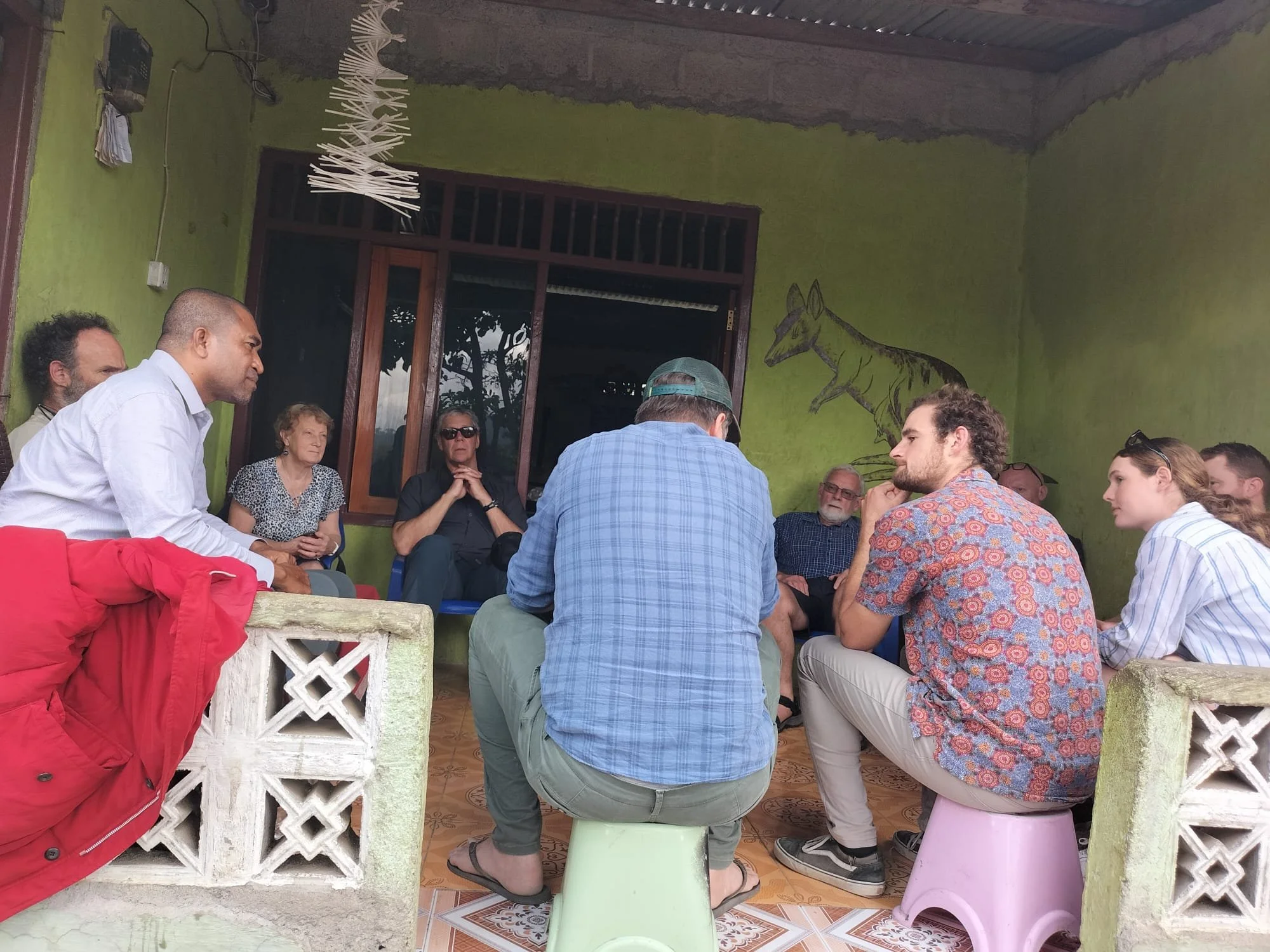
During the study tour, Sunny talked about the Adaptive Edge with the stakeholders and it is from discussions like the one on this photo that the idea of bringing this training to more people emerged.
For those looking to develop the skills to become more resilient leaders or workers, the value of Adaptive Edge is not necessarily in having all the answers, but in developing the confidence and tools to keep moving when the answers are not immediately clear. And through the Community of Practice, that learning does not have to end when the training does.
Interested in bringing Adaptive Edge to your organisation and becoming part of our Community of Practice?
Abundant Water, an Australian volunteer-led organisation, is taking action, now. Our work is already making a tangible difference in Timor-Leste, the Philippines, and Laos. But we need your help to go further, faster. Even the smallest contribution can mean clean water, better health, and renewed hope for families in need.
Act now - Because clean water can’t wait