
Clean drinking water reaches every primary school in Loes (Timor-Leste) - April 2026
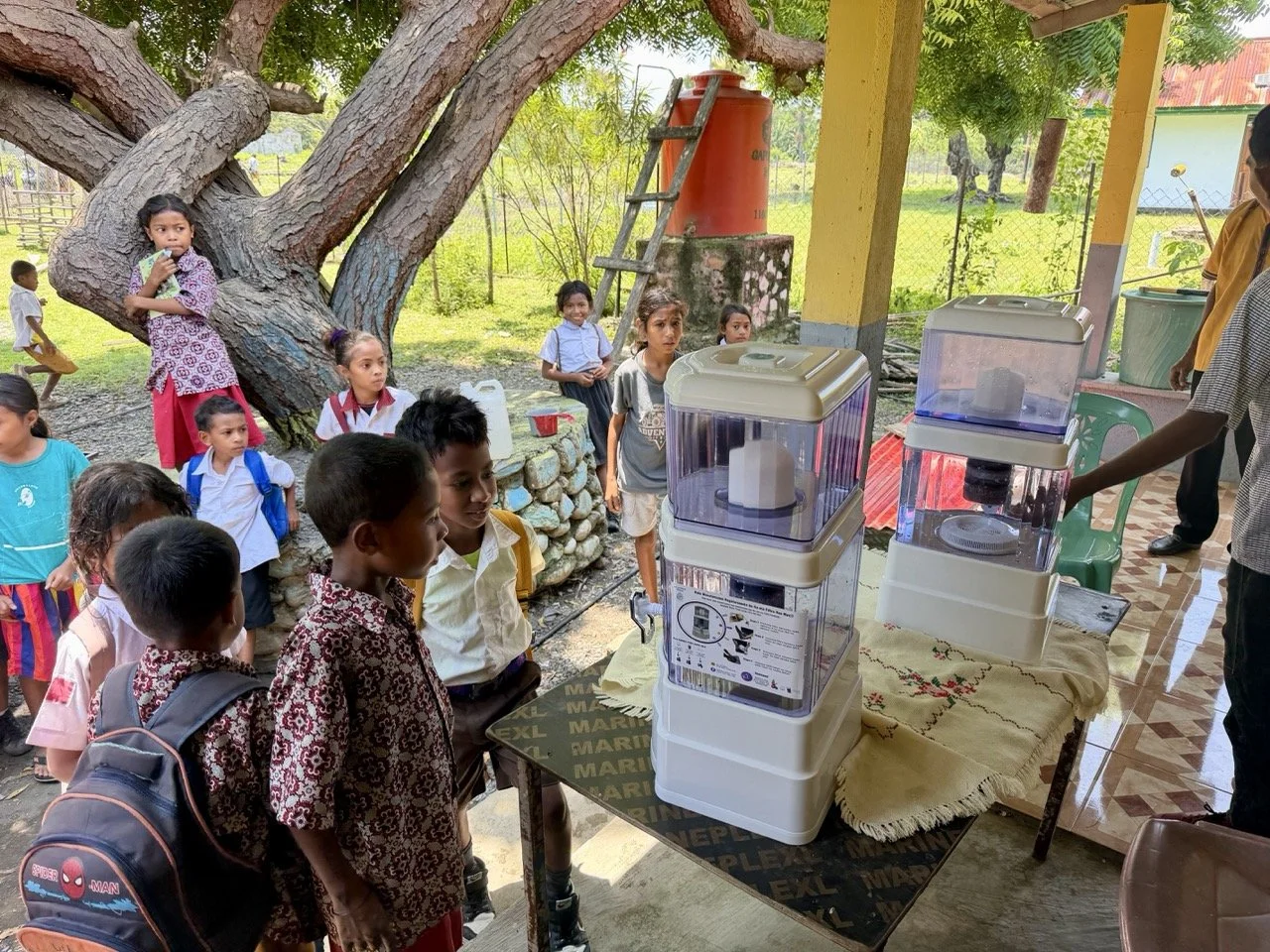
Curious students examine their school's new water filters at Guiço Primary School in Guiço village, Timor-Leste.
Last month marked a significant milestone for school water access in Timor-Leste. In March 2026, 22 schools across the country purchased new water filters, including 15 schools in Loes administrative post, a rural area around 70km west of Dili.
Together, these installations mean that, perhaps for the first time in Timor-Leste, primary school students across an entire subdistrict now have access to clean, filtered drinking water at school.
More than 2,350 students and teachers get access to safe drinking water
Previously, students in these schools had limited and often unsafe options. Many brought water from home, purchased plastic bottles from nearby kiosks, or drank untreated tap water, which carries serious health risks. The reliance on bottled water not only adds a financialburden for families, but also contributes to plastic waste in communities where disposal options are limited.
With the installation of 24 filters across 15 primary and preschools in Loes, more than 2,350 students and teachers can now access safe drinking water throughout the school day.
Alongside this work, schools in Bobonaro and Dili municipalities also chose to purchase filters in March, with five new schools coming on board and two existing schools adding extra units. In total, 22 schools invested in filters last month, reflecting growing interest from schools themselves in finding practical, reliable water solutions.
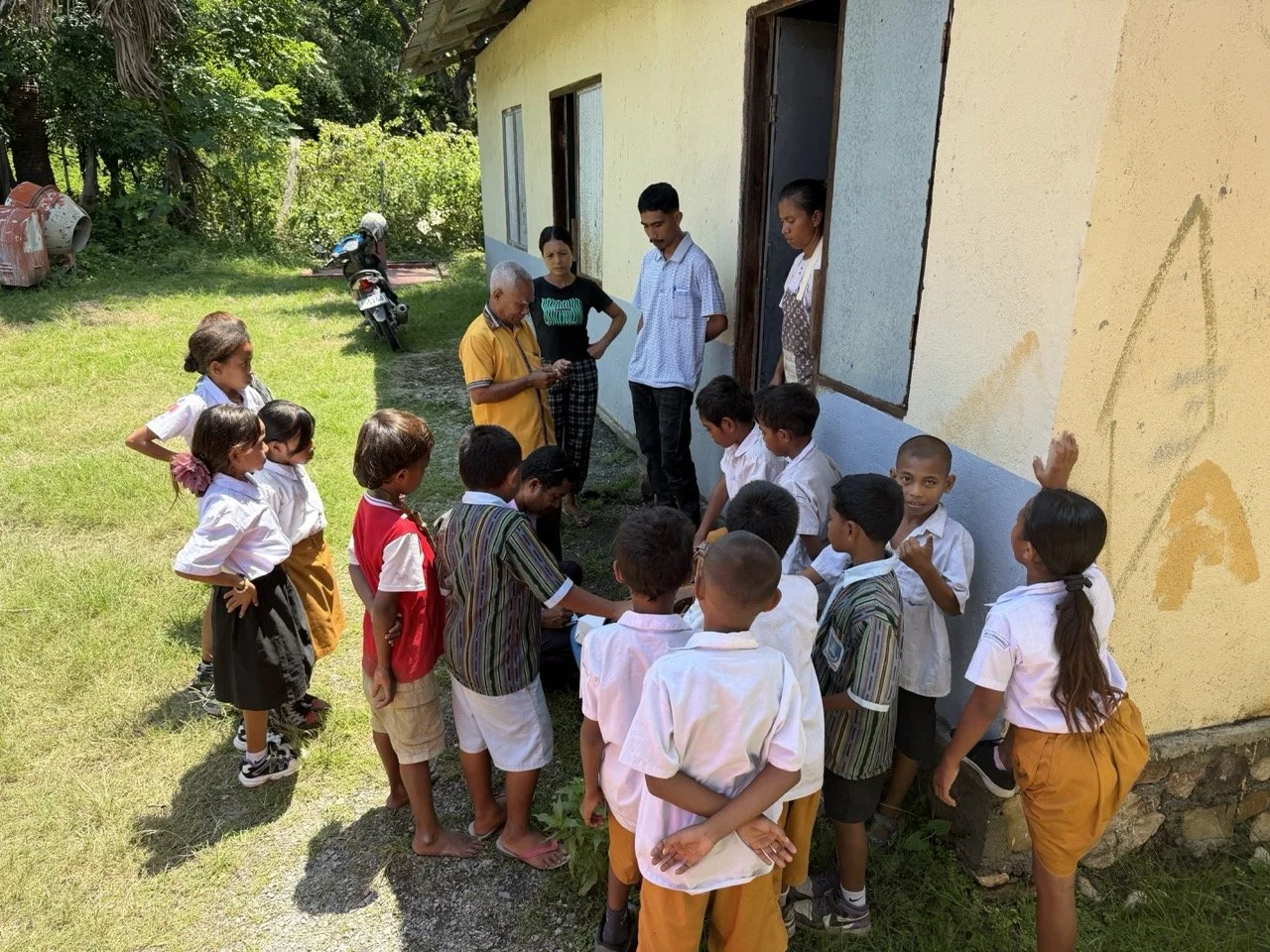

Captions: (Left) Students, administrators, and staff look on as Abundant Water vendor Ozorio Leque unboxes a water filter at Tapomanuhulu Primary School in Gugleur village, Timor-Leste. (Right) Loes school feeding program coordinator Beneditos Gonçalves fills a newly-installed water filter at Guiço Primary School in Guiço village, Timor-Leste.
Installation challenges
Filters were installed across both central schools and smaller branch schools, including several in hard-to-reach areas that are often overlooked by other WASH (Water, Sanitation and Hygiene) programs. In Loes, this meant our team had to travel to scattered communities where access can be challenging, but where the need is clear.
These installations were largely driven by the efforts of Abundant Water vendor Ozorio Leque, who worked closely with school administrators to promote the use of filters. With support from Abundant Water - including tailored promotional materials, as well as installation and monitoring support - schools were able to make informed decisions and invest in their own water solutions.


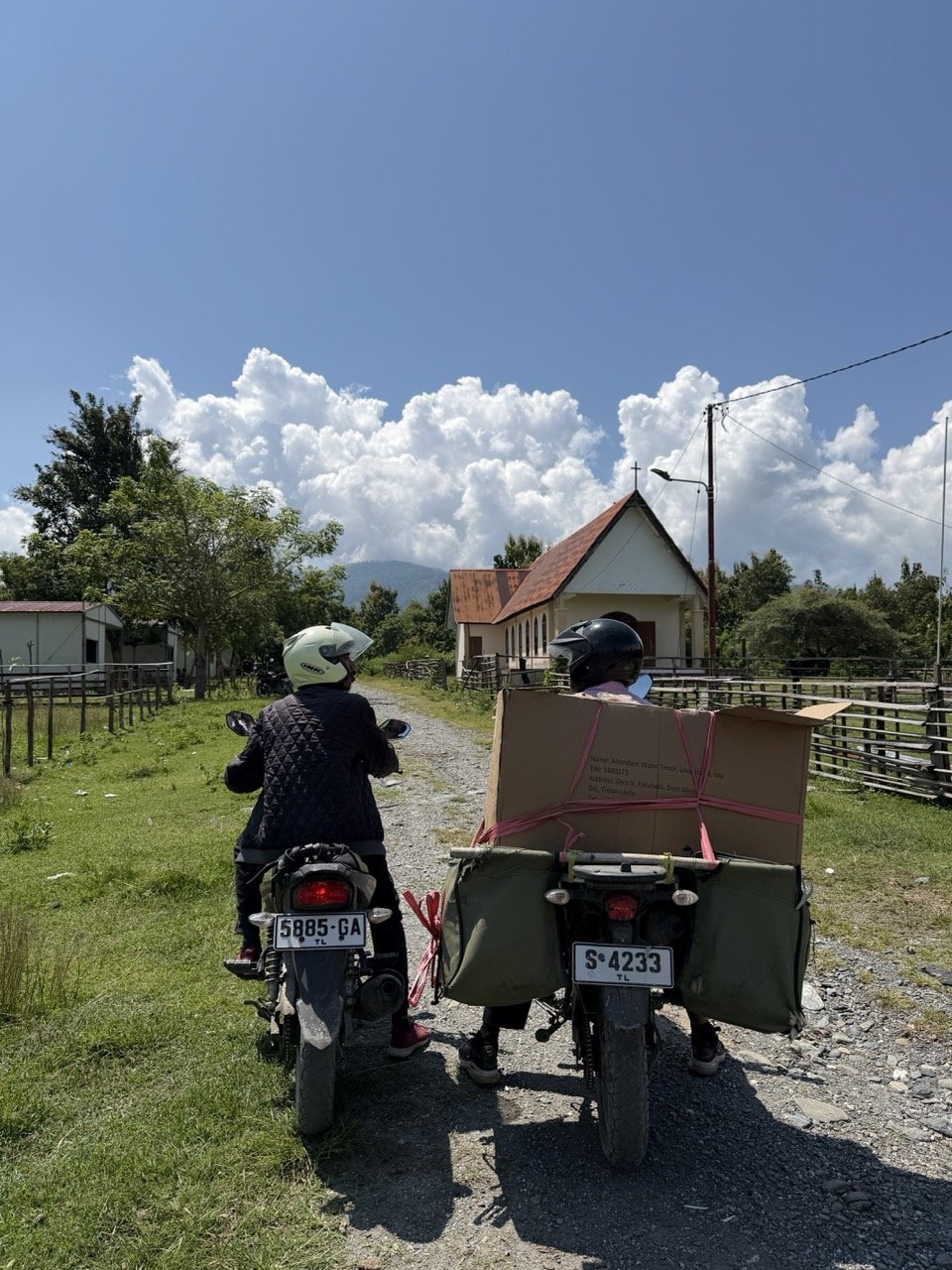

Captions from left to right: (Top) Abundant Water vendor Ozorio Leque looks on as a teacher fills a newly-installed water filter at Caicasa-Vou Preschool in Guiço village, Timor-Leste.| Abundant Water vendor Ozorio Leque (seated) demonstrates water filter assembly to teachers and school administrators at Siamodo Primary School in Lisadila village, Timor-Leste.
(Bottom) Abundant Water vendor Ozorio Leque (right) and Loes school feeding program coordinator Beneditos Gonçalves (left) transporting water filters to a preschool in Lisadila village, Timor-Leste. Remote areas like this are often only accessible by motorbike in the wet season, when road conditions and flooding prevent access by cars and buses. | Students and a teacher look on as Abundant Water vendor Ozorio Leque washes a new water filter before assembly at Siamodo Preschool in Lisadila village, Timor-Leste.
The sustainability challenge
Importantly, these schools used existing school feeding program funds, allocated annually by the Ministry of Education, to purchase their filters. This model of self-funding plays a key role in long-term success.Schools that invest their own resources tend to take greater ownership of their filters, which, along with ongoing follow-up support by the Abundant Water team, leads to more consistent use and better maintenance over time.
In Loes, the team also saw a familiar pattern. Several schools had previously received water systems from other organisations, but these were no longer in use. School staff shared that when parts broke or systems required technical support, there were limited options to repair or replace them. As a result, systems were left unused over time.
This experience continues to reinforce the importance of solutions that schools can manage themselves, both financially and practically, so that safe water access can be maintained well beyond the initial installation.
By ensuring that filters are affordable, accessible, and easy to maintain, the Abundant Water model continues to support schools in managing their own safe water access, both now and into the future.
Abundant Water, an Australian volunteer-led organisation, is taking action, now. Our work is already making a tangible difference in Timor-Leste, the Philippines, and Laos. But we need your help to go further, faster. Even the smallest contribution can mean clean water, better health, and renewed hope for families in need.
Act now - Because clean water can’t wait